Monday, December 8, 2024
Feast of the Immaculate Conception
Gn 3:9-15, 20; Eph 1:3-6, 11-12; Lk 1:26-38
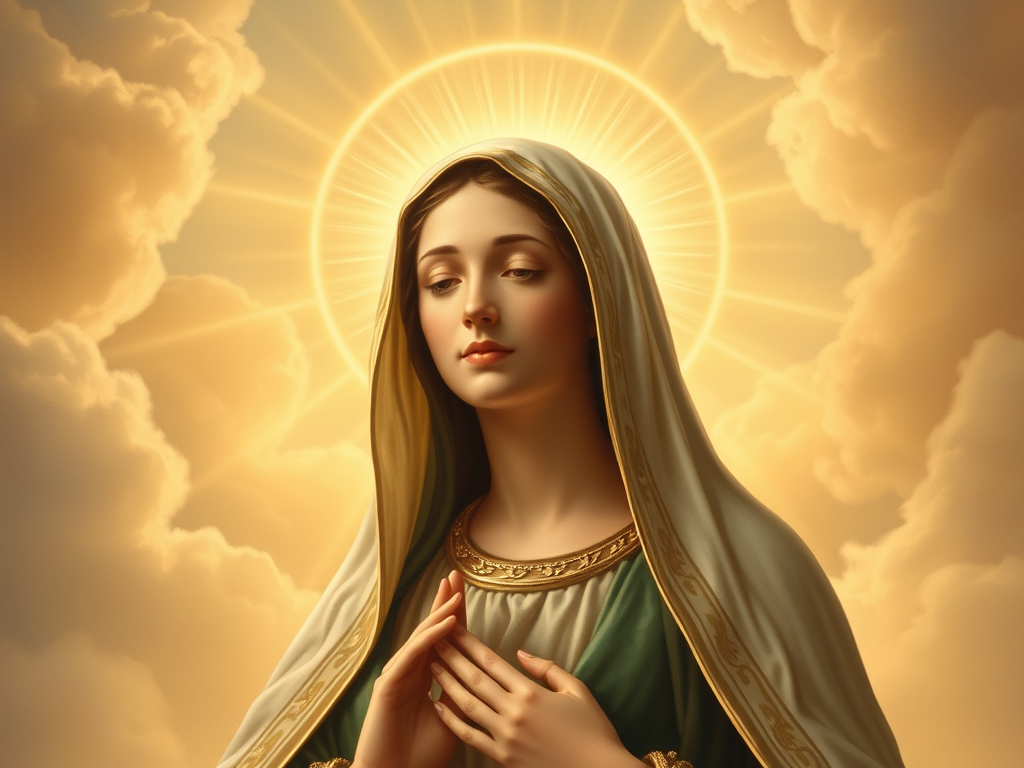
Today, we celebrate the solemnity of the Immaculate Conception.
The dogma of the Immaculate Conception proclaims that the Virgin Mary was conceived without original sin. In other words, Mary, Mother of God, by an act of divine grace, was preserved from sin from the first instant of her conception.
Our celebration of the Solemnity of the Immaculate Conception should help us remember that the teachings of our faith should not remain abstract concepts but instead shape our lives.
In other words, if we are not challenged by the doctrinal truth of our celebration, it is of no help.
As such, we are to ask ourselves today: ‘How does the celebration of the Immaculate Conception change my life?’
There are three ways in which we think of the feast of the Immaculate Conception shedding light to form and shape our moral lives.
1.We were immaculate. While we remember the special act of divine grace at the immaculate conception of Mary, we forget the fact that we too were made immaculate at our baptism, in which God’s grace took away our original sin. While Mary was preserved from sin from the first instant of her conception, our spotless condition was realized at our baptism. However, looking at Mary’s life, one can say that she justified the special act of God’s favor at her conception. Her faith as God’s first disciple justified her election by God for this unique privilege to be conferred on her. Hence, we are to ask ourselves if our lives justify the divine grace we received at our baptism by which we were made sinless and pure.
2. We have freedom. As we celebrate the feast of the Immaculate Conception, we understand that Mary teaches us what true freedom means. Mary’s life clears the misunderstanding that our freedom does not only mean ‘freedom from’ but also our ‘freedom for.’ In this sense, it is helpful to recall the distinction made by the Dominican moral theologian Servais Pinckaers between ‘freedom of indifference’ and ‘freedom of excellence.’ While the former would denote a state of inaction because it cannot see beyond the self-limiting belief of ‘freedom from,’ the latter would symbolize human striving to be the best we can be thanks to its realization that we have the freedom, precisely ‘for’ excellence. Mary’s life exemplifies the freedom of excellence so that she could make use of her freedom to cooperate with God’s will unconditionally. Mary epitomizes the true ideal of freedom by making use of it ‘for’ carrying out God’s will on earth. How do we understand freedom, and what is our response to God’s initiative?
3. We have an exemplar. Christian moral life benefits from the model of an exemplar. We need role models to make progress in moral life. For instance, though we are aware of our stewardship toward God’s creation, when we personally witness it in the life of St. Francis of Assisi, we are more edified to conduct our lives in utter simplicity like him. We are inspired to model his example thanks to the fact that he was also a human like us. In the same way, in Mother Mary, we find our exemplar to be the most faithful and committed disciple of God. By looking at her life, we draw lessons for our moral life. In this regard, Mary, the first and faithful disciple of God, has a lot to teach us.
Let us pray that we may be deeply inspired by Mary’s example to become God’s faithful disciple like her.
Fr. Dhinakaran Savariyar
Discover more from gospeldelights
Subscribe to get the latest posts sent to your email.
Excellent reflection Fr. Dhina. Thanks for your ministry. 🙏